Introduction
Most feedback goes wrong in one of two ways. It is either so soft that nothing changes, or so loaded that the other person stops listening. In both cases, the real issue gets lost. The conversation becomes about tone, defensiveness, or interpretation instead of what actually happened and what to do next.
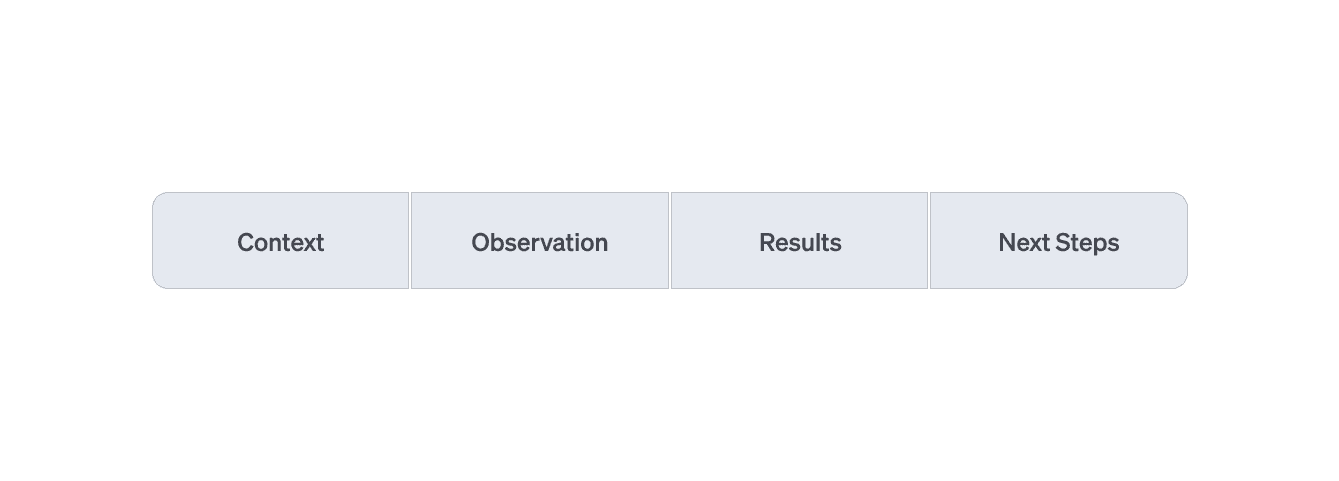
That is why simple feedback models keep surviving. CORN is one of the better ones because it does not ask you to become scripted or managerial. It just gives the conversation a spine: start with the situation, stay close to what you observed, explain why it mattered, and end somewhere useful. Context, Observation, Result, Next Steps.
There are plenty of cousins to this model. SBI, COIN, and CORE all circle the same truth: feedback lands better when it is tied to something real. CORN works because it carries that logic all the way through. It does not stop at naming the problem. It helps you turn the moment into a better next move.
Using CORN Without Sounding Scripted
The point of CORN is not to recite four labels at someone. The point is to help you say one honest thing clearly.
Start with context so the conversation has a shared reference point. "In sprint planning on March 12" is better than "recently." Precise context lowers friction. It tells the other person you are not building a case from a vague accumulation of feelings. You are talking about one moment they can actually remember.
Then move to observation. This is where people either build trust or lose it. Observation means describing what happened in a way a camera could have captured. One of the clearest reminders I have seen is this: "Describe the actual, observable behavior." "Story ABC-142 was estimated without backend input" is useful. "You were careless in planning" is not. The first gives someone something to respond to. The second turns behavior into identity, which almost always makes people defend themselves instead of reflect.
"Describe the actual, observable behavior."
Result is where the feedback earns its weight. If the observation is the event, the result is why the event matters. Maybe the team under-scoped the work and slipped by three days. Maybe QA stopped raising concerns because they felt dismissed. Maybe a client conversation stayed constructive because someone summarized the problem before jumping to a solution. If you skip this part, feedback can feel picky or personal. When you name the result, you show that the conversation is about consequences, not preferences.
Next steps are where a lot of feedback gets clumsy. People either end with nothing actionable, or they stack on a pile of prescriptions that sound like homework. A good next step is smaller than most people think. It should feel like the start of a different pattern, not a punishment disguised as process. "Add backend review to the estimation checklist, and I'll tag the right owners before sizing" works because it is clear, shared, and doable. It gives the team somewhere to go. That matters because good feedback should open a conversation, not end one. A model like this should be "not a mic drop."
When CORN is used well, it does not sound like a framework at all. It sounds like someone who paid attention, thought about the impact, and cared enough to be clear.
What It Sounds Like In Practice
The easiest way to make feedback feel artificial is to break it into labeled fragments. Real conversations have more flow than that.
Praise, for example, gets more useful when it points to a behavior worth repeating. "On Tuesday's client call, you paused and summarized the client's concern before proposing options. They felt heard, the room stayed constructive, and we got to a decision faster. Keep using that summarize-first move in high-stakes calls." That is still CORN, but it reads like a person noticing good judgment, not a manager filling out a template.
The same is true for corrective feedback. "During yesterday's incident review, you dismissed QA's findings as edge cases before we checked the logs. We lost time, and it made QA less likely to push on valid concerns. Next time, let's review the evidence together before we label severity." Clear, direct, fair. No personality diagnosis. No dramatic phrasing. Just the moment, the effect, and the adjustment.
CORN also holds up well in upward feedback, which is often where people get either too blunt or too vague. "In last Thursday's roadmap review, we moved three Q1 items to Q2 without checking dependencies. Two risks surfaced late, and now the teams involved have to replan. Can we add a dependency check before we approve those shifts? I'm happy to draft it." That works because it stays grounded. It does not accuse leadership of being disorganized; it names a decision pattern and the cost that came with it.
One of the most overlooked uses of the model is recognition with evidence. "On the March 5 release, you introduced lazy-loading on the gallery page. Load time dropped from 2.3s to 1.6s and support tickets went down. Please document the approach so we can apply it elsewhere." Strong positive feedback is not just encouragement. It teaches the team what good looks like and why it matters.
Where Feedback Usually Breaks
Most bad feedback is not malicious. It is just imprecise.
Sometimes it is too generic to be useful. "Nice work" feels pleasant, but it does not help someone understand what to repeat. "Do better" creates pressure without direction. The fix is almost always the same: anchor the comment in a real moment and name the effect.
Sometimes the problem is fuzzy context. Words like "lately" and "recently" sound harmless, but they create ambiguity fast. If the other person has to guess which situation you mean, the conversation is already wobbling.
Sometimes the mistake is moralizing the behavior. The second feedback turns into "you do not care" or "you are careless," the conversation becomes about character. That is rarely the real goal. If you stay with observable behavior, you leave room for accountability without turning the exchange into a verdict on the person. That is also what keeps people open. When people feel judged, they shut down; when they feel understood, they are more likely to grow.
When people feel judged, they shut down; when they feel understood, they are more likely to grow.
And sometimes people simply try to do too much. They mix praise, criticism, coaching, and five separate asks into one breath. That is usually a sign the speaker has not decided what matters most. CORN works best when the point is singular. One conversation. One issue. One next move.
Conclusion
What I like about CORN is that it respects the human part of feedback without getting mushy about it. People need honesty, but they also need clarity. They need to know what happened, why it mattered, and whether there is a path forward that feels possible.
That is the real value of the model. Not the acronym itself, but the discipline behind it. Stay specific. Stay fair. Tie the conversation to consequences, not identity. End with a next step that can actually happen. Do that consistently and feedback starts to feel less like a performance and more like a normal part of how good teams learn.