AI has learned to talk. Now it has to learn to move.
For most of the last few years, AI has felt like something trapped behind glass. It writes in a text box, edits an image, summarizes a meeting, generates a mockup, or answers a question. It can feel intelligent, but it is mostly bodiless.
Physical AI changes that.
It asks what happens when intelligence has weight. When it has cameras, motors, hands, wheels, rotors, batteries, balance, latency, and consequences. It is AI with gravity.
That distinction matters. A chatbot can be wrong and revise its answer. A robot can drop a glass, block a hallway, miss a step, damage equipment, or move too close to a person. The physical world is not a prompt window. It is messy, continuous, unforgiving, and full of edge cases.
Why Physical AI Matters
But that is also why this moment feels so important. For decades, robotics has been one of the clearest expressions of the original AI dream: a machine that could perceive the world, reason about what was happening, and act with purpose.
That dream is much older than the current hype cycle. In the late 1960s and early 1970s, Shakey the Robot brought together perception, planning, route-finding, and simple physical action. Developed at SRI from 1966 to 1972, Shakey is often described as the first mobile robot able to perceive and reason about its surroundings. It did not look futuristic by today’s standards, but the ambition was enormous: connect sensing, reasoning, and movement into one system.
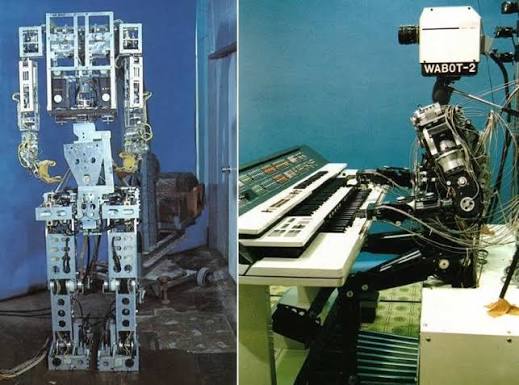
A few years later, Waseda’s WABOT-1 explored another branch of the same dream: the humanoid. Built between 1970 and 1973, WABOT-1 combined limb control, vision, conversation, walking, and grasping in an early full-scale anthropomorphic robot. Long before today’s humanoid startups, researchers were already asking what it would mean for a machine to operate in a world built around the human body.
The Physical World Is Harder
The lesson from that history is not that progress was slow. The lesson is that the physical world was harder than software made it look.
Robotics had to solve problems that language models could mostly avoid: balance, friction, torque, battery life, object permanence, occlusion, terrain, safety, maintenance, and the thousand small failures that happen when a machine has to share space with people. Intelligence was never just about reasoning. It was also about recovering when the floor changed, the object slipped, the lighting shifted, or the task did not go according to plan.
The Robots That Changed The Mental Model
That is why Boston Dynamics became such an important bridge between research and imagination.
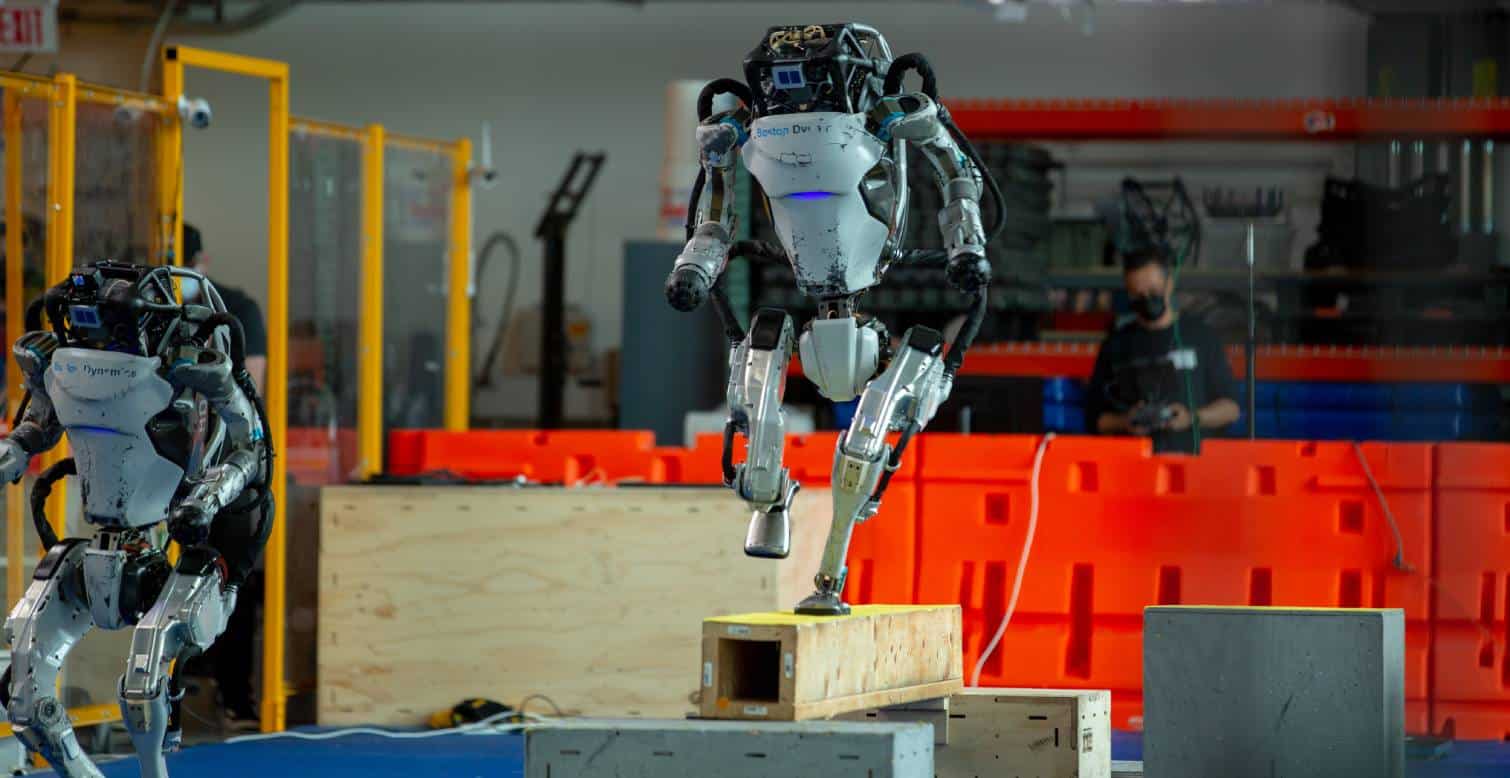
For many people, Boston Dynamics was the first time robotics felt visceral. Their machines did not just make autonomy visible. They made it physical. BigDog stumbled across rough terrain. Atlas jumped, balanced, fell, recovered, and eventually moved with a kind of unsettling fluency. Spot turned legged mobility into a product. Stretch narrowed the problem to warehouse unloading and logistics. Each robot made a different argument about what kind of body a machine might need.
Boston Dynamics’ current Atlas is described as a humanoid robot built for real-world industrial work and material handling, grounded in decades of robotics research and deployment experience. The company’s move from hydraulic Atlas to a fully electric Atlas also says something about the field’s direction: less theatrical demonstration, more practical deployment, maintainability, and industrial usefulness.
But the deeper lesson from Boston Dynamics is not simply “humanoid robots are coming.” It is that movement itself is intelligence.
A robot that can walk across uneven ground is not just executing motion. It is continuously negotiating physics. A robot that can stay upright after a push is not just following a script. It is sensing, predicting, correcting, and adapting in real time. A robot that can climb stairs, avoid obstacles, or handle a warehouse task is showing that intelligence is distributed across perception, control, hardware, software, and the body itself.
This is one of the most important ideas in physical AI: a robot’s body is not just a container for intelligence. It is part of the intelligence.
A humanoid says the world was built for people, so copy the person.
A quadruped says terrain matters more than resemblance.
A drone says the best path may not be on the ground at all.
A robot arm says constrain the environment and master the task.
A home appliance robot says do one narrow job well enough that no one has to think about it.
The body is an argument about the environment.
Why Humanoids Matter, But Aren't The Whole Story
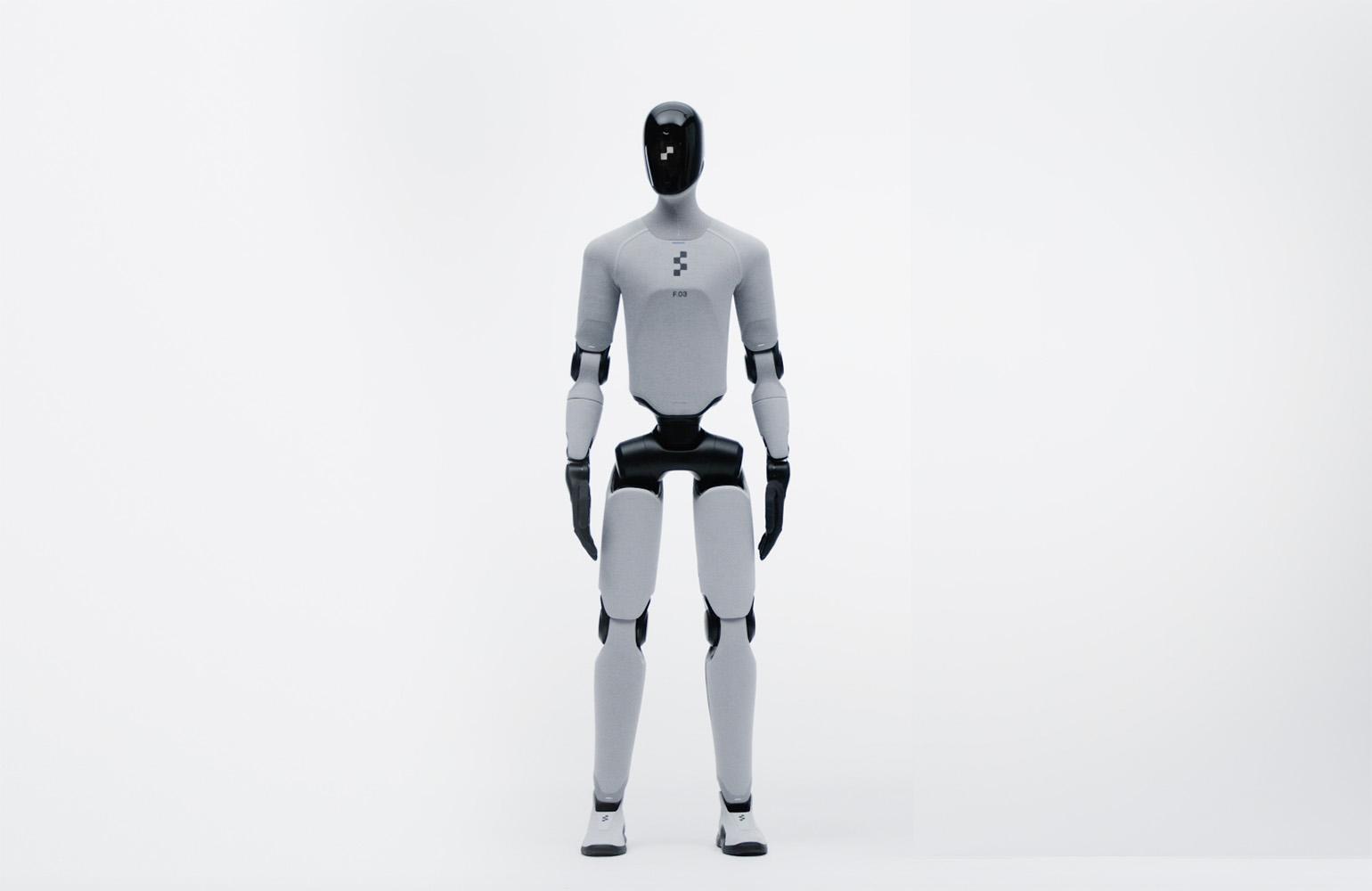
That is why the future of physical AI should not be reduced to humanoids, even though humanoids are currently the most visible symbol of the category. They are compelling because homes, factories, tools, doors, shelves, stairs, and vehicles were designed around human proportions. A general-purpose humanoid promises to enter that world without requiring us to rebuild everything around the machine.
But copying the human body means inheriting some of the hardest engineering problems at once: bipedal balance, dexterous hands, power efficiency, safety, cost, thermal limits, perception, manipulation, and social expectations. A humanoid has to be technically useful and emotionally acceptable. It has to work around people without feeling dangerous. It has to be strong enough to matter, but soft enough to trust.
That tension explains why the present moment is so interesting. Physical AI is not advancing because one company finally built the perfect robot body. It is advancing because the entire stack underneath robotics is changing.
The Stack Is Changing
For much of robotics history, systems were either heavily programmed for a narrow task or trained in constrained environments. That made sense. The world was too broad, robot data was too scarce, and real-world deployment was too unforgiving. But in the last few years, robotics has started absorbing the lessons of foundation models.
Google DeepMind’s RT-2 was one of the clearest signs of this shift. Introduced in 2023, RT-2 was described as a vision-language-action model that learned from both web-scale vision-language data and robot data, translating language and images into robotic actions. In other words, it attempted to connect the semantic knowledge of internet-trained AI with the physical actions of a robot.
Then came Open X-Embodiment and RT-X, which moved the conversation from one robot to many. The project assembled data from 22 different robots across 21 institutions, covering hundreds of skills and many tasks, and showed that models trained across embodiments could improve the capabilities of multiple robots by learning from experience gathered on other platforms. That is a major conceptual step. It suggests that robotic learning may not have to remain trapped inside one lab, one robot body, or one task-specific setup.
OpenVLA pushed the open-source side of this further. It introduced a 7B-parameter open vision-language-action model trained on 970,000 real-world robot demonstrations, making VLA research more accessible and easier to fine-tune for new tasks. Physical Intelligence’s π0, or pi-zero, took a similar foundation-model framing into generalist robot policies, arguing that robotics needs models that can draw from broad multi-task and multi-robot training the way language models draw from broad language pretraining.
NVIDIA’s Isaac GR00T represents another layer of the shift: the infrastructure layer. GR00T is positioned as a research initiative and development platform for robot foundation models and data pipelines, particularly to accelerate humanoid robotics. That matters because physical AI is not just a model problem. It is also a simulation problem, a data problem, a middleware problem, an edge-compute problem, and a deployment problem.
Google DeepMind’s Gemini Robotics also points toward this broader future. DeepMind describes Gemini Robotics models as allowing robots of different shapes and sizes to perceive, reason, use tools, and interact with humans while solving complex real-world tasks. That wording is important: different shapes and sizes. The future is not one robot. It is many embodiments connected by more general forms of perception, reasoning, and action.
Figure’s Helix sits inside this same wave. Figure describes Helix as a generalist vision-language-action model for humanoids, unifying perception, language understanding, and learned control, including high-rate continuous control of the upper body, wrists, torso, head, and fingers. 1X’s NEO and Redwood AI show another path, bringing humanoid robots toward the home while acknowledging the present limitations. NEO uses Redwood AI for learning and repeating tasks, and for more complex tasks, 1X describes a scheduled Expert Mode where a remote expert can supervise actions and help the robot learn.
That human-in-the-loop detail is not a weakness to hide. It is a window into how physical AI may actually arrive.
The first versions of useful physical AI may not be fully autonomous in the magical sense people imagine. They may be supervised, corrected, guided, constrained, updated, and trained over time. They may use teleoperation to collect data, experts to handle edge cases, simulation to rehearse, and foundation models to generalize. The path to autonomy may pass through many layers of human assistance.
This is not unusual. Many technologies arrive first as hybrids. Elevators had operators. Cars needed roads, rules, mechanics, and driving culture. Early computers needed specialists. Physical AI may arrive in the same way: not as an instantly independent helper, but as a system that becomes more autonomous through repeated use, feedback, and deployment.
Where It Shows Up First
Still, the humanoid story is only one part of the larger shift.
Autonomous drones are already a form of physical AI. Skydio, for example, describes its autonomy system as using onboard computing to see, understand, and react in real time, avoiding obstacles as small as a half-inch wire. That is intelligence shaped by flight: lightweight, fast, spatial, energy-constrained, and constantly negotiating risk. A drone does not need hands or legs to be intelligent. It needs to understand space well enough to move through it safely.
Autonomous vehicles, warehouse robots, agricultural machines, delivery bots, robot arms, surgical systems, inspection robots, lawn mowers, pool cleaners, vacuums, and home appliances are all part of the same broader story. Some are more autonomous than others. Some barely look like what people imagine when they hear “robot.” But they all point toward a future where intelligence is embedded into machines that sense and act.
This is where the phrase “physical AI” becomes more useful than “robots.” Robots make us think of bodies. Physical AI makes us think of capability.
A robot vacuum is not a humanoid, but it is physical autonomy in a constrained domestic environment. A drone inspecting infrastructure is not a household companion, but it can perceive, navigate, and gather information in places humans may not easily reach. A warehouse arm does not need to chat, but it may need to identify, grasp, sort, and recover from messy object arrangements. A quadruped does not need a face, but it may need to climb stairs, map a facility, and keep moving through environments that would stop a wheeled machine.
The future of physical AI will likely be practical before it is magical.
It may arrive first in places where the environment is valuable, repetitive, dangerous, labor-constrained, or measurable. Warehouses. Factories. Farms. Hospitals. Construction sites. Utilities. Mines. Military and emergency response. Elder care. Kitchens. Infrastructure inspection. These are domains where small improvements in safety, uptime, labor availability, or throughput can justify expensive machines before the average home can.
Why The Home Is Hard
The home is the dream, but it is also one of the hardest environments. Homes are unstructured, personal, cluttered, varied, and full of delicate social expectations. A factory can be redesigned around a robot. A home usually cannot. A warehouse task can be measured. A household task often has invisible preferences. “Clean the kitchen” is not one task. It is a thousand contextual judgments about what belongs where, what is dirty, what is fragile, what should be thrown away, and what should never be touched.
That is why the near future may look less like a single robot butler and more like a spectrum of embodied systems.
Some will be humanoid. Some will be boxes on wheels with arms. Some will fly. Some will live inside appliances. Some will be industrial machines with better perception. Some will be soft, compliant, and slow. Some will be fast, dangerous, and restricted to controlled environments. Some will be general-purpose. Many will be specific.
The Shape Of Intelligence
The best form will depend on the task.
This is the core idea behind the shape of intelligence. Intelligence is not abstract once it enters the physical world. It becomes shaped by where it acts. The body determines the sensors. The sensors determine what can be perceived. The actuators determine what can be changed. The battery determines how long it can work. The environment determines how much failure is acceptable. The social context determines how close it can get to people.
A chatbot can be many things at once because language is a flexible interface. A physical machine has to choose. Legs or wheels. Arms or no arms. Indoor or outdoor. Fast or safe. Strong or compliant. Cheap or capable. General or specialized. Visible or invisible. Humanlike or intentionally non-human.
That is why physical AI may eventually stretch our imagination more than screen-based AI. It will force designers, engineers, and product teams to ask not only what intelligence can do, but what shape it should take.
The Constraints Still Matter
And there are still serious constraints.
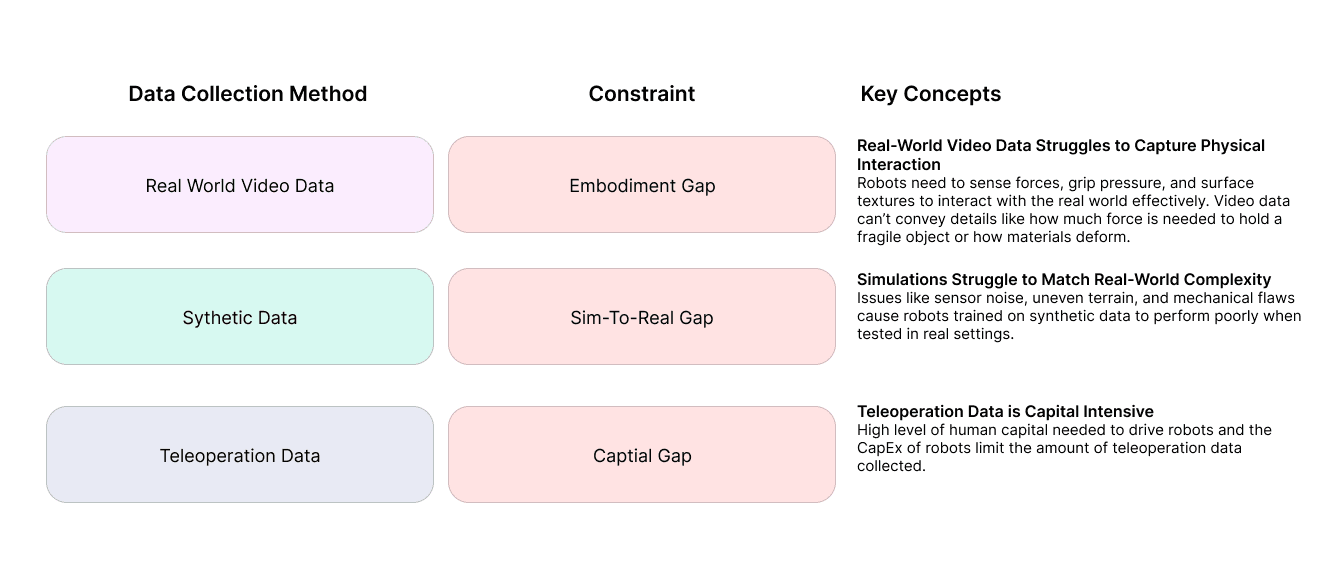
Robot data is expensive. Unlike language models, which were trained on oceans of text and images from the internet, robots need data from bodies acting in environments. That data is slow to collect, difficult to standardize, and tied to specific hardware. A demonstration from one robot hand may not transfer cleanly to another. A policy that works in a lab may fail in a kitchen. A behavior that works in simulation may break when the floor is slippery, the light is different, or the object bends.
The simulation-to-reality gap remains one of the defining problems. Simulation is essential because it allows robots to practice faster and more safely than they could in the real world. But reality is still richer than simulation. Materials deform. Sensors drift. Motors heat. Objects slip. People interrupt. The world does not pause while the model recalculates.
Reliability is another barrier. A robot that succeeds 80% of the time is a demo. A robot that succeeds 95% of the time may still be frustrating. A robot that succeeds 99.9% of the time starts to become infrastructure. That last gap is often the hardest and least glamorous part of productizing autonomy.
Safety also becomes more complicated when AI has a body. Physical AI systems need to know not only how to complete a task, but when not to act. They need to recognize uncertainty, defer when needed, move predictably, and fail safely. In a physical setting, confidence is not enough. A robot has to be trustworthy under contact, proximity, and ambiguity.
Cost may be just as important as capability. A robot can be technically impressive and still commercially irrelevant if it is too expensive to buy, operate, maintain, repair, insure, or train. Hardware has a supply chain. It has wear and tear. It has support costs. It has downtime. It has to survive real customers, not just controlled demos.
This is why physical AI should be understood less as a sudden arrival and more as a long convergence. The pieces are arriving at different speeds: better models, better simulation, better chips, better sensors, better motors, better data pipelines, better teleoperation, and better industrial demand. The breakthrough is not any single part. It is the way these parts are starting to reinforce each other.
Foundation models make robots more adaptable.
Simulation makes training safer and faster.
Teleoperation creates embodied data.
Better hardware makes deployment more practical.
Edge compute makes real-time control more feasible.
Real-world deployment creates the feedback loop that improves the models.
That loop is the real story.
The Bigger Question
Physical AI is not just AI moving into robots. It is robotics becoming a learning system.
The most interesting question, then, is not “when will robots arrive?” Robots have been arriving for decades. They arrived in factories, labs, warehouses, hospitals, farms, skies, roads, and homes in uneven waves. The better question is: what kinds of intelligence become possible when machines can finally learn from the physical world at scale?
That question opens up a much wider future.
Maybe physical AI gives us humanoid workers that can operate in human spaces. Maybe it gives us fleets of drones that inspect bridges, power lines, forests, and disaster zones. Maybe it gives us agricultural machines that tend individual plants. Maybe it gives us warehouse systems that can handle the messy long tail of objects. Maybe it gives us home robots that start with laundry, dishes, and object retrieval, then slowly learn the rhythms of a household. Maybe it gives us entirely new categories of machines that do not resemble people at all.
The future will not be one robot.
It will be intelligence finding the right body for the job.
That is what makes physical AI different from the AI wave we have just lived through. It is not only a new interface. It is a new relationship between computation and the world. It asks machines to stop merely representing reality and start participating in it.
AI has learned to generate words, images, code, and plans. Physical AI asks whether it can turn perception into action, action into feedback, and feedback into learning.
It asks whether intelligence can become useful under gravity.
And if it can, the shape of intelligence will no longer be a rectangle on a screen. It will be walking, rolling, flying, grasping, cleaning, carrying, inspecting, building, repairing, and quietly adapting to the world around us.
Key Takeaways
- Physical AI is AI under consequence. It has to act in a world where mistakes have weight.
- The body is part of the intelligence. Form factor shapes perception, action, safety, cost, and usefulness.
- Humanoids are a chapter, not the whole book. They matter because the world was designed around humans, but many useful robots will not look human.
- The model layer is changing the field. Vision-language-action models, robot foundation models, simulation, and cross-embodiment datasets are turning robotics from hand-programmed systems into learned systems.
- The near future will be practical before it is magical. Warehouses, factories, inspection, agriculture, logistics, hospitals, and narrow home tasks may scale before general-purpose home robots.
- The better question is not “when will robots arrive?” It is: what shape should intelligence take for the task in front of it?
Sources
- SRI International, “Shakey the Robot.”
- Waseda Humanoid Robotics Institute, “WABOT-1.”
- Boston Dynamics, “Atlas Humanoid Robot.”
- Boston Dynamics, “An Electric New Era for Atlas.”
- Google DeepMind, “RT-2: New model translates vision and language into action.”
- Open X-Embodiment / RT-X project.
- OpenVLA paper, “An Open-Source Vision-Language-Action Model.”
- Physical Intelligence, “π0: Our First Generalist Policy.”
- NVIDIA, “Isaac GR00T.”
- Google DeepMind, “Gemini Robotics.”
- Figure AI, “Helix: A Vision-Language-Action Model for Generalist Humanoid Control.”
- 1X, “NEO Home Robot.”
- Skydio, “Skydio Autonomy.”