Dispatchr is the world’s most sophisticated grid resilience software, providing predictive analytics, mobile fleet management, and integrated weather, vegetation and grid impact analysis for the electrical utility industry.
DispatchrWeb
Background
The Problem
Utility teams lacked a clear way to track progress, manage work orders, and report on operations from the web app.
Solution
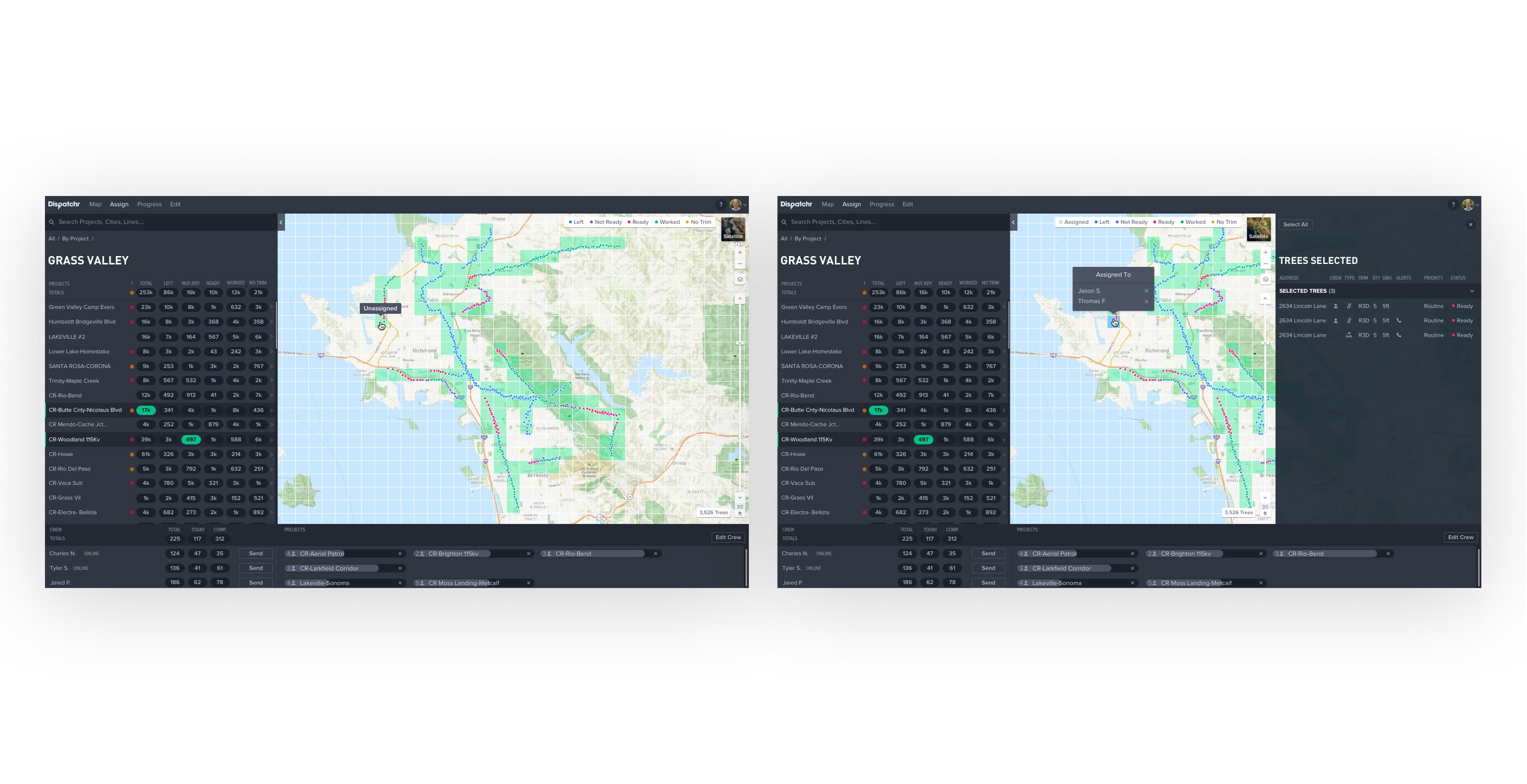
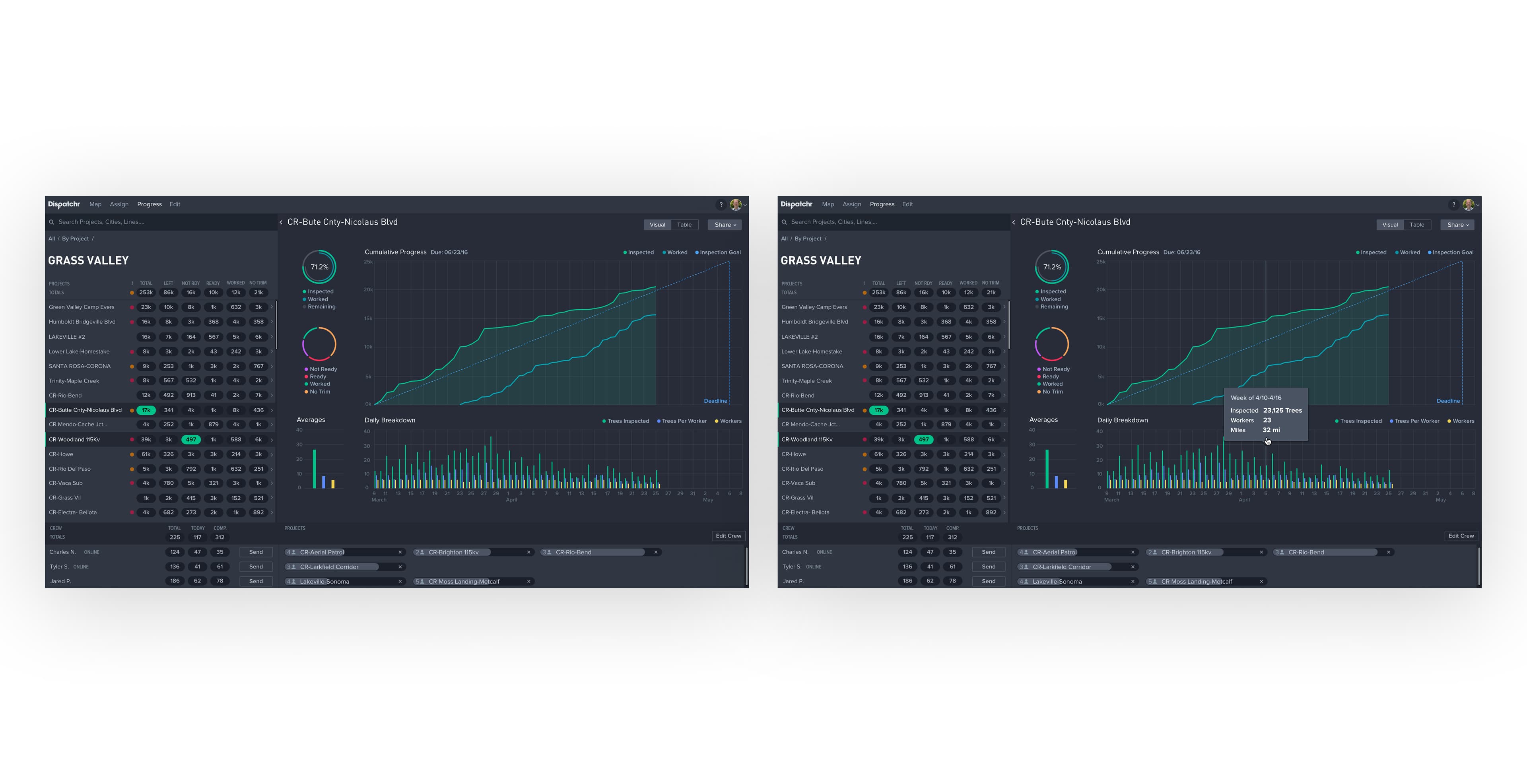
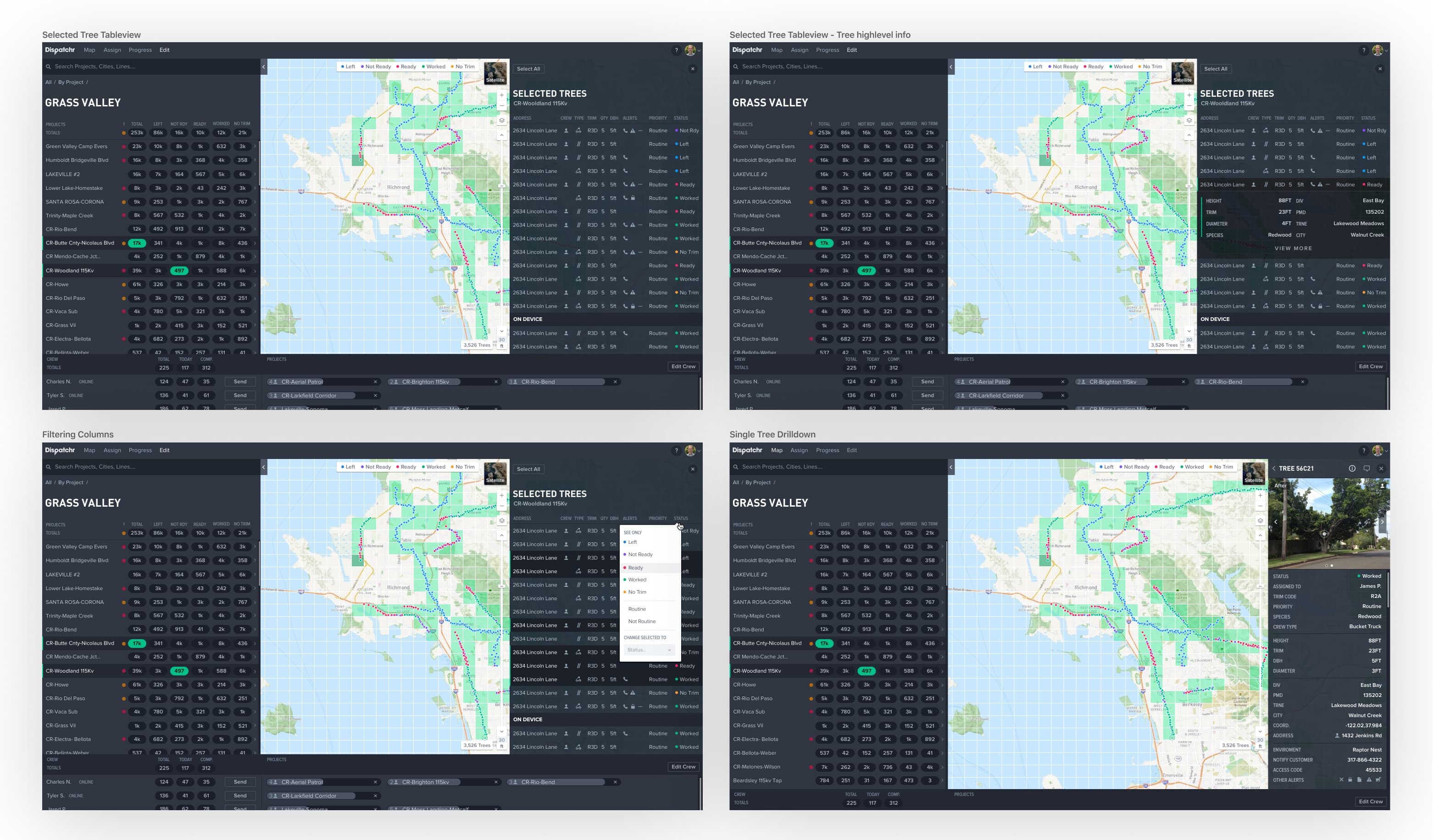
One of the core tools for managing workorders is the Dispatchr web app. A place to see progress made, distribute work orders, view data and alerts, and so much more.
Overview
Dispatchr is the world’s most sophisticated grid resilience software, providing predictive analytics, mobile fleet management, and weather analysis for the electrical utility industry.
At the time I joined, the desktop application lacked critical functionality for seeing progress, managing projects in detail, and supporting the operational work utility teams needed every day.
Background
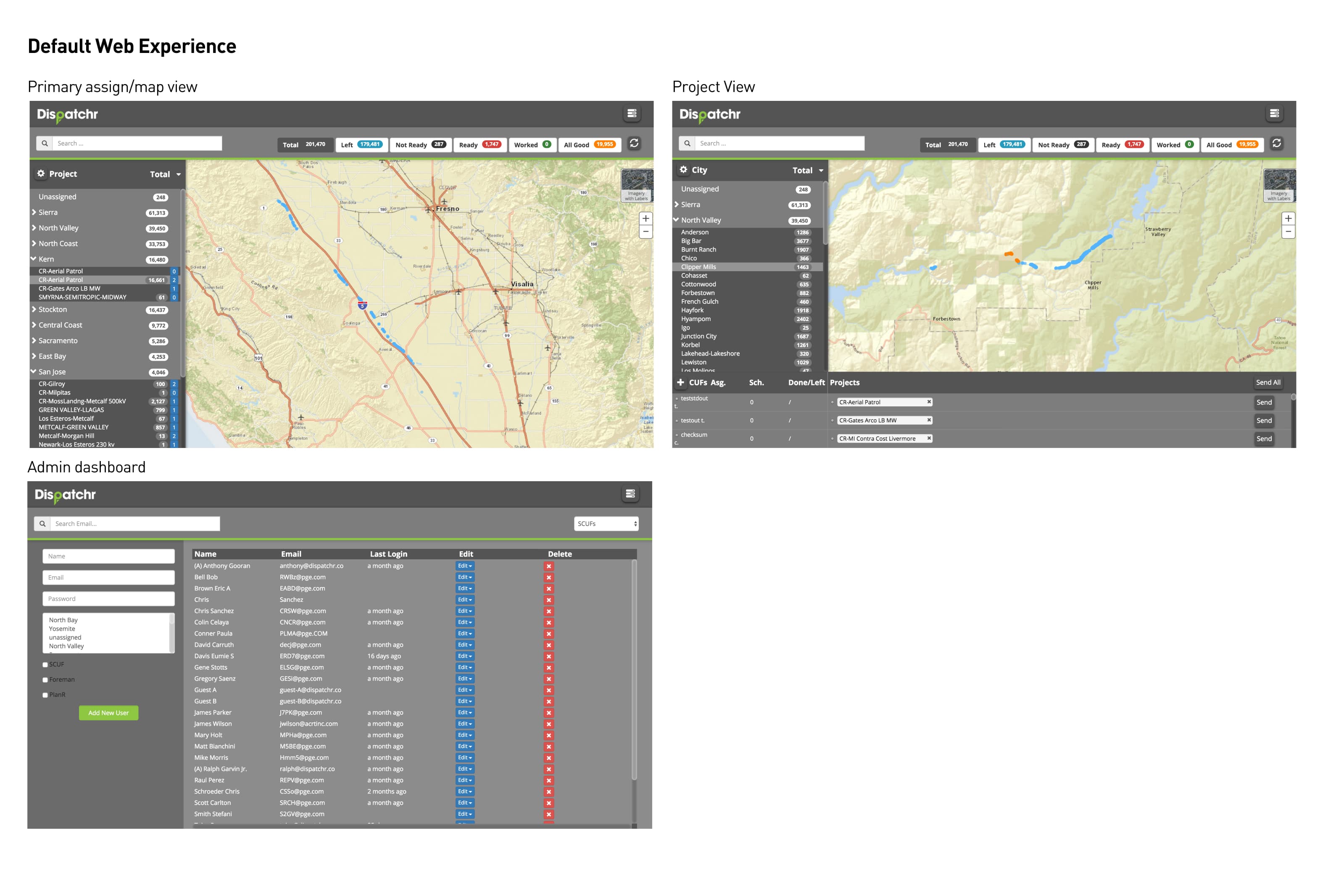
Project Context
Dispatchr's software sat on both desktops and mobile devices, but the desktop experience needed to become the core place where operations teams could distribute work, inspect status, and coordinate the field.
The project focused on making the web app feel like a real command center for utility operations instead of a thin companion to the mobile product.
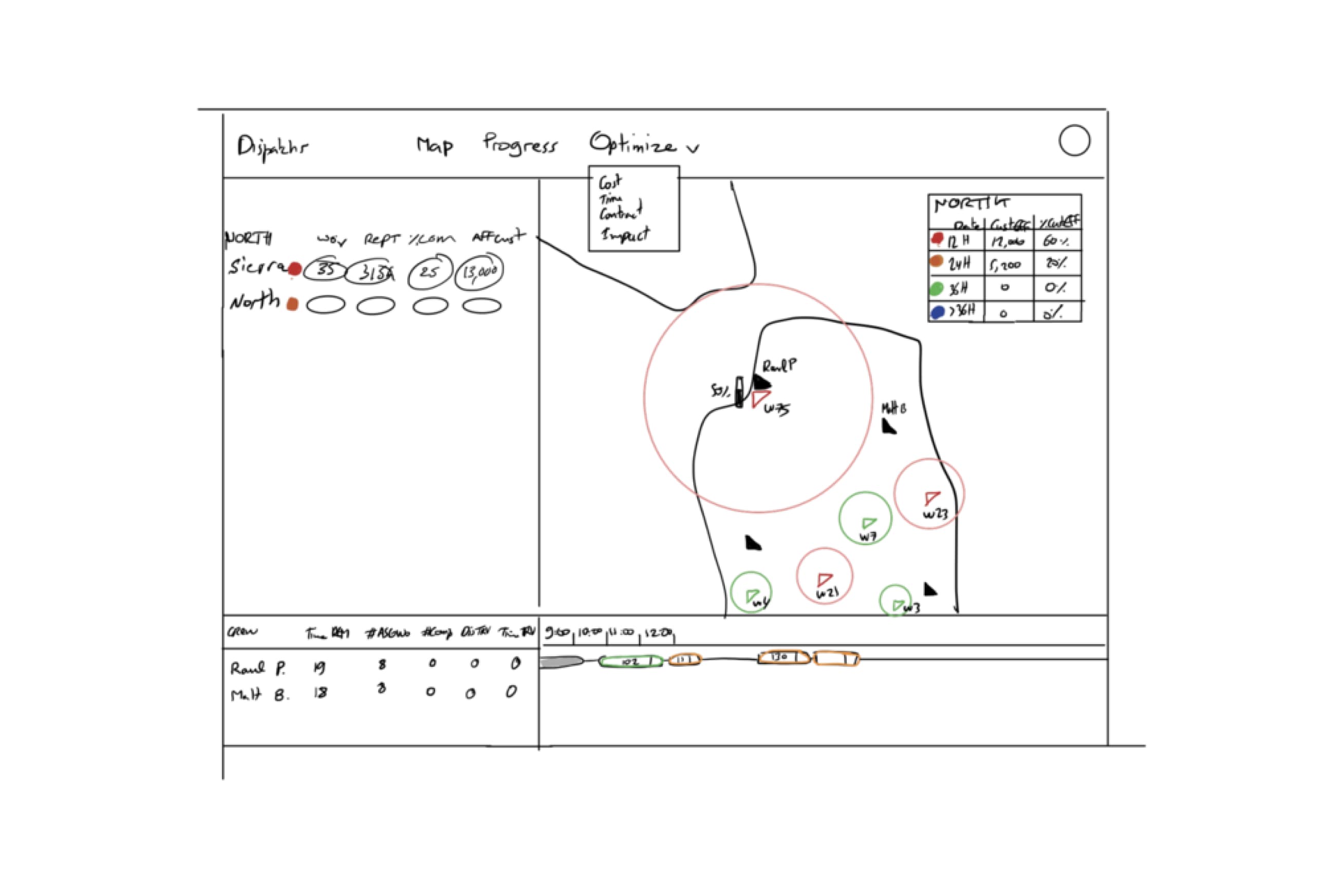
Problems facing
When we kicked off efforts to improve the core application, we started by defining the areas the product needed to support and scale from.
Those three topics were resource allocation, connecting data, and reducing human error as much as possible.
Resource allocation
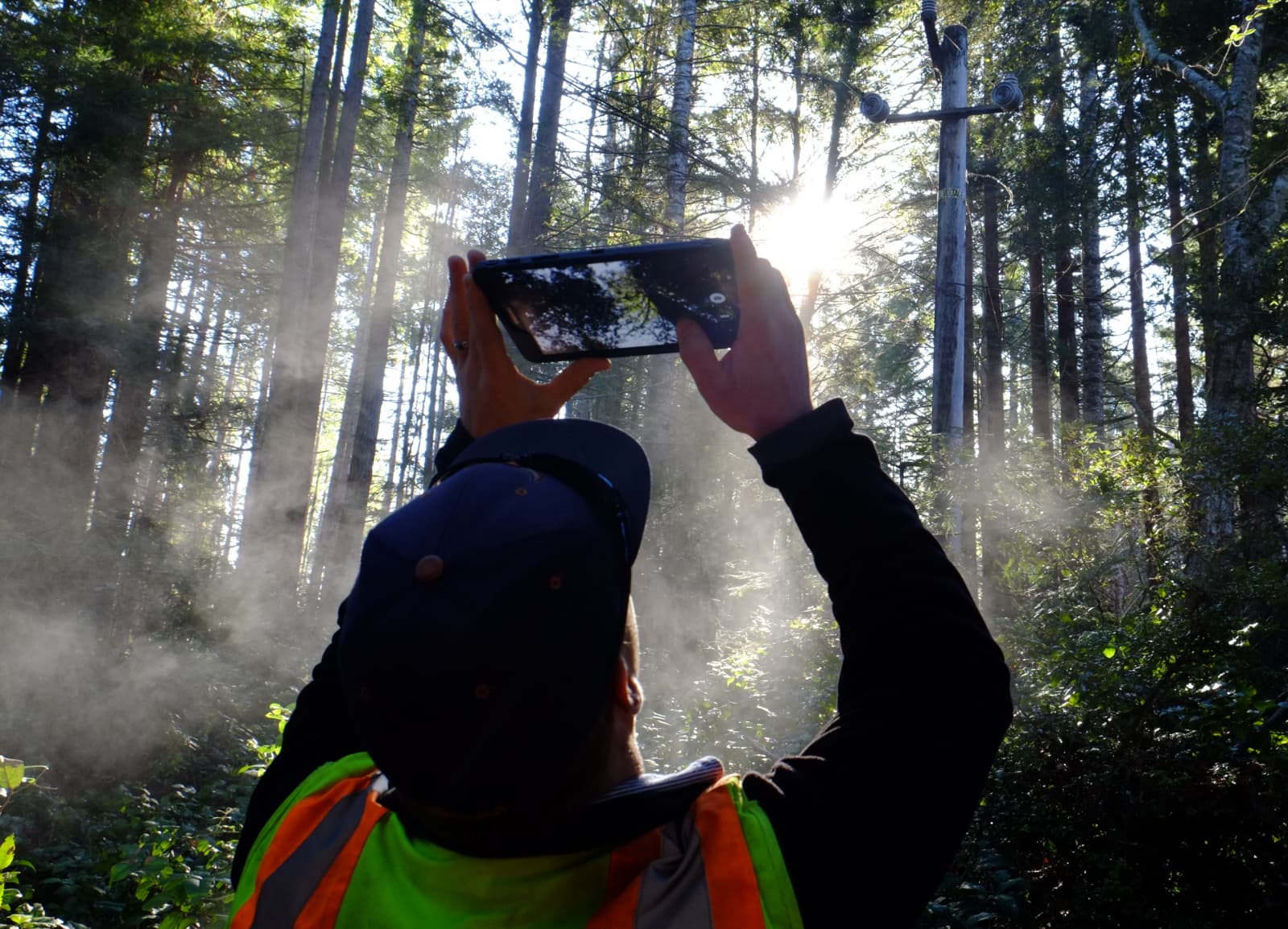
Utilities struggle to keep track of their field workers.
During a storm, it can take hours for the right person to arrive, so getting crews to the right place before issues happen is critical.
Unconnected data
Utilities pull from internal, operational, and external sources.
Without a clear system, those inputs create gaps and slow down communication between teams.
Human error
Too much of the work was still managed through spreadsheets, email, and pen-and-paper.
That made errors common and costly across thousands of people and a huge coverage area.
Outcome
The resulting web experience gave teams a clearer place to track progress, distribute work orders, and view the operational data they needed to make decisions faster.
It also set a stronger foundation for future expansion by making the product easier to extend without breaking the core workflow.